Why Choose Sustainable Renovation?
Opting for cabinet refinishing is an eco-friendly choice that reduces waste. Keep your existing structures while giving them a new life.
Our Eco-Friendly Approach
- Use of high-quality, durable materials
- Minimizing waste through refinishing
- Combining traditional craftsmanship with modern techniques
Modern homeowners increasingly look for ways to improve their homes without unnecessary waste. Full replacement of kitchens, cabinets, and built-in furniture often sends large amounts of usable material to landfills. In many cases, renovation alternatives provide the same visual transformation while using far fewer resources.
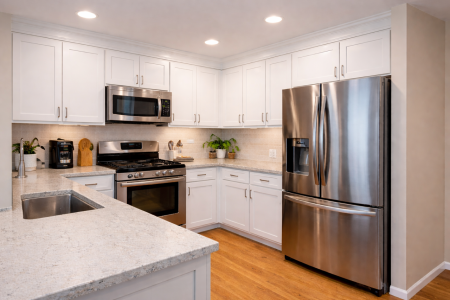
Cabinet refacing and professional spray finishing are practical examples. If the cabinet structure is solid, replacing it entirely is rarely necessary. Updating the surface, color, and hardware can completely change the appearance of a kitchen while preserving the existing framework. This approach reduces material waste, lowers project costs, and shortens renovation time.
Surface refinishing also consumes significantly fewer raw materials than manufacturing new cabinetry. Instead of cutting new wood, producing new panels, and transporting large furniture units, refinishing works with what already exists. The environmental impact is therefore substantially lower.
Another advantage is energy efficiency. Manufacturing new cabinets requires energy for milling, finishing, packaging, and transportation. Renovation alternatives avoid most of these stages. A professional refinishing project typically takes only a few days and produces minimal construction waste.
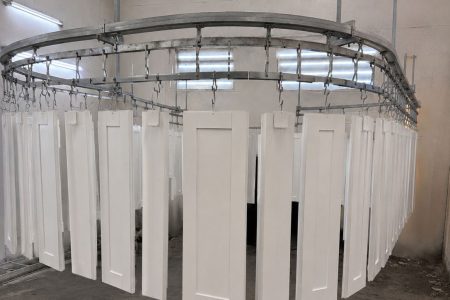
Sustainable renovation does not mean compromising on aesthetics. Modern coatings, professional spray equipment, and careful preparation allow existing cabinetry to achieve a smooth, factory-level finish. The result is a refreshed interior that aligns with contemporary design trends while respecting environmental responsibility.
Choosing renovation over replacement is often the most practical path. It preserves resources, reduces waste, and delivers a renewed living space without the disruption of a full remodel. In many homes, the most sustainable solution is not replacing what works, but improving it thoughtfully.